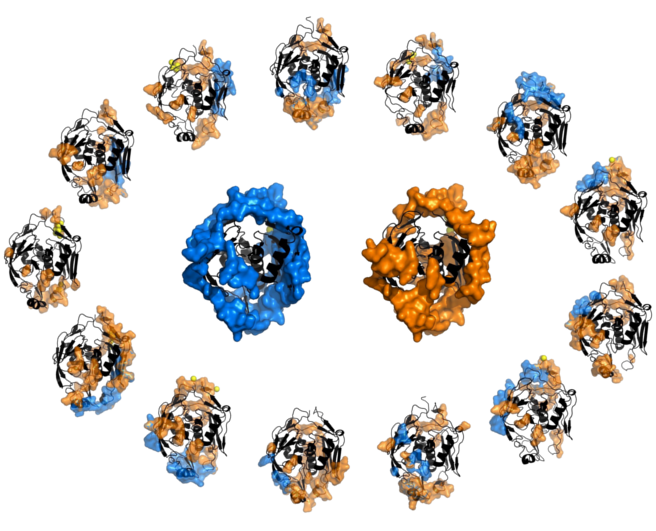
Nonribosomal peptide synthetases (NRPSs) are microbial megaenzymes that make a wide variety of small-molecule products, including many that are clinically used as antitumors, antibiotics, or immunosuppressants. Peptide synthesis proceeds with assembly-line logic, where each station on the NRPS assembly line is a multidomain unit called a module. While the function of single modules is well studied, much less is known how they work together. Researchers from the Schmeing lab at McGill University have resolved several dimodular NRPS structures, which show coordinated interactions between modules, and large conformational changes between catalytically relevant states. Martin Weigt from the “Statstical Genomics and Biological Physics” team has performed complementary coevolutionary analyses using the direct coupling analysis (DCA), which confirm the biological relevance and evolutionary conservation of the observed inter-modular interactions. DCA analysis has also allowed to suggest mutations in a module-swapped chimeric NRPS protein, which significantly increased the activity of the protein, a result of direct relevance toward the longstanding goal of NRPS bioengineering for production of new-to-nature bioactive small molecules.